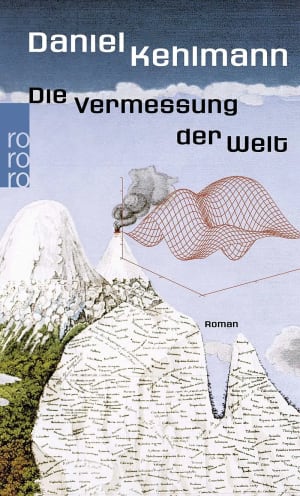
Started: 31st January 2026
Finished: 1st February 2026
Summary
A fictionalized dual biography of 19th-century German scientists Carl Friedrich Gauss and Alexander von Humboldt. The two geniuses pursued radically different approaches to understanding the world. Humboldt explored jungles, climbed mountains, and measured everything he encountered, while the reclusive Gauss concluded that space must be curved without leaving his home.
My Thoughts
The story has two main themes: experimental vs. theoretical science and aging.
The naturalist von Humboldt tried to understand the world by personally experiencing the unknown, while the theoretician Gauss studied it by observing the stars and measuring magnetic fields from his home in Göttingen—drawing conclusions from pen and paper alone.
The aging theme runs quietly through the book. Both men achieved their greatest insights young, and the novel doesn't shy away from showing what comes after. The brilliance that came so easily in youth becomes harder to access. And now the world has moved on without them.
The book is entertaining, funny, and thought-provoking at the same time. However, I found myself wishing the scientific side had a bit more depth. Kehlmann keeps the actual discoveries, especially Gauss's mathematics, deliberately light. Some more detail on how their work shaped their era and influenced what came after would have made it even better.
Aber während die ersten Vororte Berlins vorbeiflogen und Humboldt sich vorstellte, wie Gauß eben jetzt durch sein Teleskop auf Himmelskörper sah, deren Bahnen er in einfache Formeln fassen konnte, hätte er auf einmal nicht mehr sagen können, wer von ihnen weit herumgekommen war und wer immer zu Hause geblieben.
— Daniel Kehlmann, Die Vermessung der Welt (p. 293)