Die Vermessung der Welt
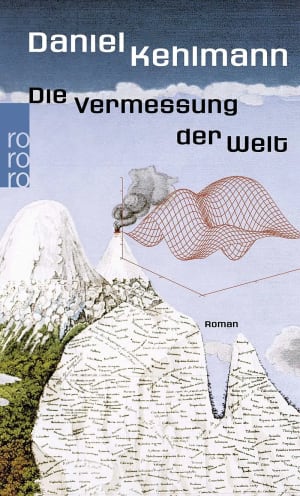
The story has two main themes: experimental vs. theoretical science and aging. [... 153 words]
If people do not believe that mathematics is simple, it is only because they do not realize how complicated life is.
— Ananyo Bhattacharya, The Man from the Future, A remark that John von Neumann made at the first national meeting of the Association for Computing Machinery in 1947.
The Man from the Future
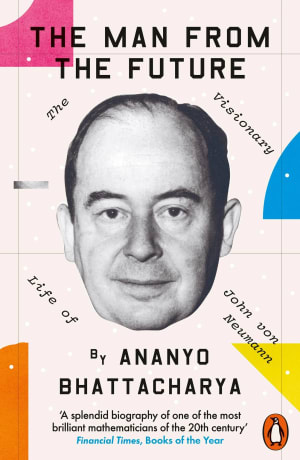
Fascinating biography of one of the greatest minds of the 20th century. Von Neumann’s scientific contributions span an almost unbelievable range: computing (the von Neumann architecture that still underpins virtually all general-purpose computers), quantum mechanics (he wrote the book that gave the field its mathematical foundations), the Manhattan Project (he developed the mathematical framework for the explosive lenses that were critical to the plutonium bomb’s implosion design), and game theory (which he co-founded with Oskar Morgenstern in their 1944 book). The biography ties together so much history and technology from the 20th century that it reads almost like a history of modern science told through one person’s life. [... 108 words]
Elon Musk
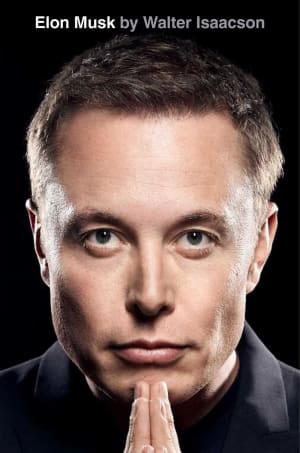
I haven’t followed Elon Musk closely until reading this book, and I get raised eyebrows when I mention having read his biography. However, reading about someone isn’t the same as agreeing with them, and there’s plenty to learn here regardless of where you stand. [... 167 words]
Elon Musk’s Algorithm
The Algorithm
- Question every requirement. Each should come with the name of the person who made it. You should never accept that a requirement came from a department, such as from "the legal department" or "the safety department." You need to know the name of the real person who made that requirement. Then you should question it, no matter how smart that person is. Requirements from smart people are the most dangerous, because people are less likely to question them. Always do so, even if the requirement came from me. Then make the requirements less dumb.
- Delete any part or process you can. You may have to add them back later. In fact, if you do not end up adding back at least 10% of them, then you didn't delete enough.
- Simplify and optimize. This should come after step two. A common mistake is to simplify and optimize a part or a process that should not exist.
- Accelerate cycle time. Every process can be speeded up. But only do this after you have followed the first three steps. In the Tesla factory, I mistakenly spent a lot of time accelerating processes that I later realized should have been deleted.
- Automate. That comes last. The big mistake in Nevada and at Fremont was that I began by trying to automate every step. We should have waited until all the requirements had been questioned, parts and processes deleted, and the bugs were shaken out.
Corollaries
The algorithm was sometimes accompanied by a few corollaries, among them:
- All technical managers must have hands-on experience. For example, managers of software teams must spend at least 20% of their time coding. Solar roof managers must spend time on the roofs doing installations. Otherwise, they are like a cavalry leader who can't ride a horse or a general who can't use a sword. Comradery is dangerous. It makes it hard for people to challenge each other's work. There is a tendency to not want to throw a colleague under the bus. That needs to be avoided.
- It's OK to be wrong. Just don't be confident and wrong.
- Never ask your troops to do something you're not willing to do.
- Whenever there are problems to solve, don't just meet with your managers. Do a skip level, where you meet with the level right below your managers.
- When hiring, look for people with the right attitude. Skills can be taught. Attitude changes require a brain transplant.
- A maniacal sense of urgency is our operating principle.
- The only rules are the ones dictated by the laws of physics. Everything else is a recommendation.
On Elon Musk by Walter Isaacson
Steve Jobs
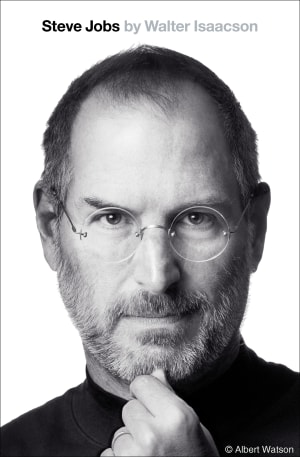
A must-read for anyone working in product or tech. It’s Silicon Valley history told through the lens of one of its most important figures, covering not just Apple but the broader ecosystem of companies that defined the industry. [... 88 words]
Steve Jobs focused on getting the first iteration perfectly. Bill Gates shipped a lousy Windows 1.0 but was persistent at iteratively improving it until it dominated.
— Walter Isaacson, Steve Jobs, Steve Jobs vs. Bill Gates