[…] if reading this wasn’t worth your time, why is it worth mine?
Therefore, I’ve adopted this principle in my work:
If you are requesting human attention, demonstrate human effort.
— Tom Bedor, On the practice of sending unsolicited AI slop to colleagues.
Appearing Productive in The Workplace. A nuanced, well-written blog post on the dangers of using AI in the workplace.
The author identifies two distinct failure modes:
Generative AI can produce work that looks expert without being expert, and the failure arrives in two shapes. The first is when novices in a field are able to produce work that resembles what their seniors produce, faster or more advanced than their judgment. The second is when people generate artifacts in disciplines they were never trained in.
Another interesting observation is on workslop, now that the cost of producing a document has fallen to nearly zero:
Requirements documents that were once a page are now twelve. Status updates that were once three sentences are now bulleted summaries of bulleted summaries. Retrospective notes, post-incident reports, design memos, kickoff decks: every artifact that can be elongated is, by people who do not read what they produce, for readers who do not read what they receive.
The author also writes about the implications for companies, which is a view I share:
For firms, the competitive advantage of a firm whose work can be trusted has not disappeared; it has, if anything, appreciated, because so many of the firm’s competitors are quietly converting themselves into content-generation pipelines and counting on the client not to notice.
The way you maintain meritocracy and excellence is to make sure that each person you bring in, and for us, this means all of our faculty, all of our staff, all of our students, we have to consistently focus on excellence. There was a colleague of mine at Duke who had a sign in his office that said, if you take a lick of the lollipop of mediocrity, you will suck forever.
— Sally Kornbluth, Long Strange Trip podcast interview with Sally Kornbluth, MIT's president.
The reason why Nvidia can move so fast is because we always have a unifying theory for the company, which is my job [as the CEO of the company]. I need to come up with a unifying theory for what's important and why things connect together and how they connect together and then create an organization, an organism that's really, really good at delivering on that unifying theory.
— Jensen Huang, Stratechery interview with Nvidia CEO Jensen Huang
I think actually what being an IC across this past year has taught me, is that it actually just gave me a lot of skills that I don't think I would've gained if I was just managing throughout this year.
— Jenny Wen, Lenny's Podcast interview. Wen left a director role at Figma to return to IC design work at Anthropic.
Is this where LLMs picked up their famous sycophantic phrase and behavior?
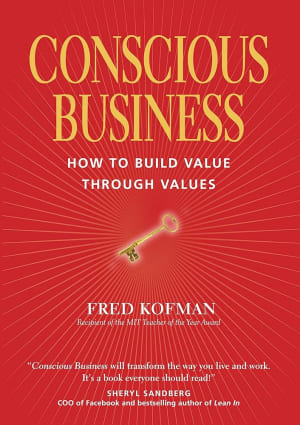
Currently reading Conscious Business by Fred Kofman, a classic on values and authentic communication at work, and stumbled across this on page 57.

On Conscious Business by Fred Kofman
High Output Management
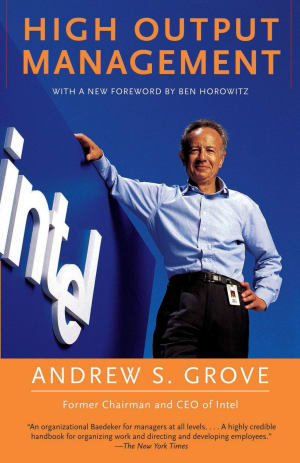
A must-read for anyone in tech who starts managing people. Many later management books simply rehash what Grove laid out in his book first, over 40 years ago. The book distills decades of experience building Intel into something remarkably clear and practical. [... 151 words]